

How To Access Active Directory On Windows 10
What is Agile Directory?
Agile Directory is a Microsoft product that operates on Windows Server. It is a database and set of services adult to assistance you lot with access, direction, and permissions for your network resources. The organizational data is stored as an object in the Agile Directory, and information technology tin be in the form of devices, files, users, applications, groups, or shared folders. In add-on, these objects tin be categorized by their proper name or attribute.
The directory or database stores critical data related to your Information technology environment, including essential details about users, user permissions, and computers. In short, it helps you control various activities going on in your IT environment. Most importantly, Advertisement as well ensures user authentication, generally via user ID and passwords, and allows them to access data they're authorized to use.
How does Active Directory work?
In the AD, the domain is the primary unit in a logical structure. The objects named under the same directory database, trust relationships, and security policies with other domains are called Domains. Each domain will store information about objects belonging to that domain only.
Settings and security policies, for case, Access Control Lists (ACLs), admin rights, etc., do not pass from one domain to another. In short, the admin can set policies only for the domain they belong to. Domains permit admins to ready boundaries for objects and handle security policies for shared network resources.
I of the principal Active Directory services is the AD DS (Active Directory Domain Services), a crucial part of the Windows Server OS. The AD DS runs on servers known as Domain Controllers (DCs). An enterprise usually has multiple DCs, and each of these controllers has a copy of the main directory for the domain. Whatever changes made to the directory on one DC- for case, deleting a user account or irresolute a password are all applied to the other DCs in a domain to continue them up-to-date.
Another DC called Global Catalog server stores a copy of all objects within a directory of its domain along with a fractional copy of all objects of other domains within a wood. This allows applications and users to find objects in any domain of its forest quickly.
Other laptops, desktops, and devices that run Windows (instead of Windows Server) practise not run Ad DS, but they can exist a part of an Agile Directory environment.
AD DS depends upon standards and protocols, such equally DNS, Kerberos, and LDAP (Lightweight Directory Access Protocol). An important thing to know is that AD is sectional to On-prem Microsoft environments. To run it in cloud Microsoft environments, you need to utilize Azure Active Directory, which works like to the On-prem variant. Azure Advertizement and AD are different simply can run together if an organization has a hybrid deployment (cloud and on-prem).
Why is Agile Directory And so Important?
To simplify and sympathise the concept of AD better, consider Active Directory every bit the "Contacts" application on your mobile telephone. The Contacts app itself acts equally an Agile Directory, while individual contacts in the app would exist its "objects". The values stored in each object, such equally phone number, address, email, etc., would exist your Active Directory. The only deviation is that objects similar in the mobile app aren't only limited to people, but Advertising may also contain group objects such as printers, computers, devices, etc.
Active Directory is vital for organizations as information technology helps you efficiently manage company users, computers, devices, and applications. For example, It managers can leverage Active Directory to systematically organize company data in a hierarchy structure, which states which users or computers vest to which network, or which users take access to which network resources, and then forth.
How to Setup Agile Directory Domain Controller?
A domain controller contains many computers on the network and allows the arrangement administrators to manage them from the central place. It is a server or figurer used to cosign other computers throughout the network. It stores the login credentials of all other computers and printers in the network.
This section will show yous how to install Agile Directory Domain Services and prepare upward a domain controller on Windows server 2019.
Follow the beneath steps to install Active Directory Domain Services:
Step 1 – Login to Windows server 2019 every bit an ambassador and open up the Server Manager as shown below:
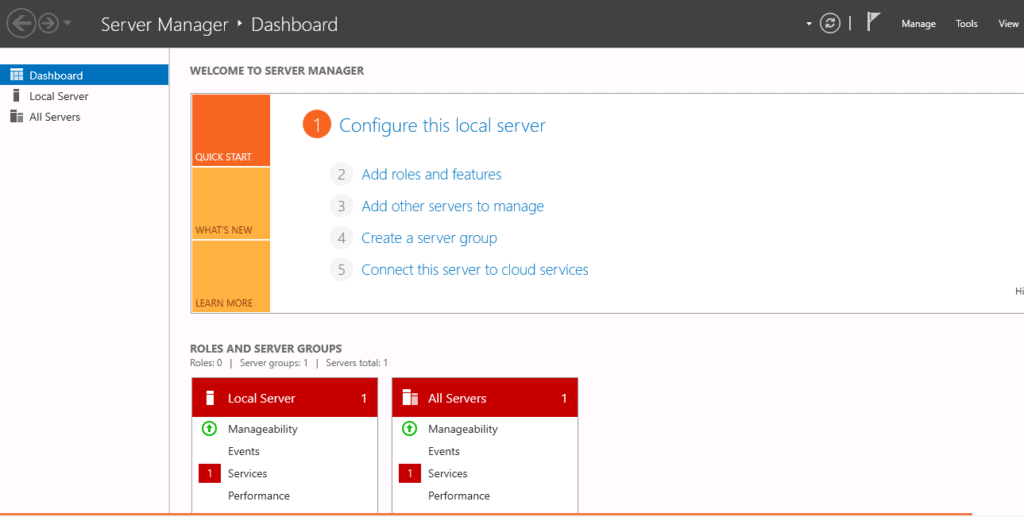
Step ii – Click on the Add Roles and Features. This volition open the Add together Roles and Features Wizard equally shown beneath:
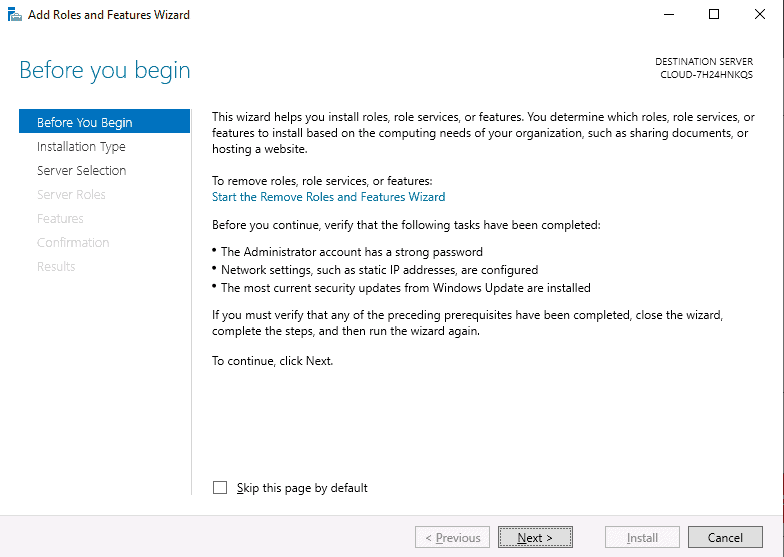
Step three – Click on the Next button. You will exist asked to select the installation type as shown below:
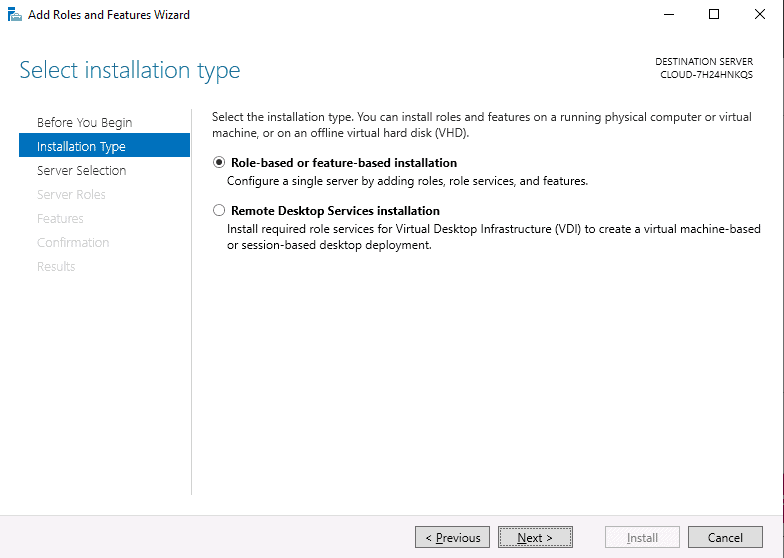
Step 4 – Select Add together Roles and Features Magician and click on the Adjacent button. Side by side, you will exist asked to select a destination server equally shown beneath:
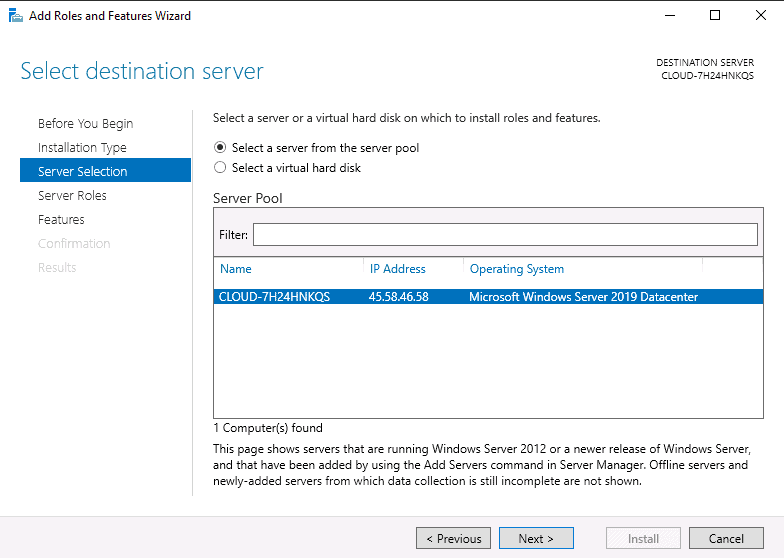
Step 5 – Select "Select a server from the server pool" and click on the Next button. Next, yous will be asked to select server roles as shown below:
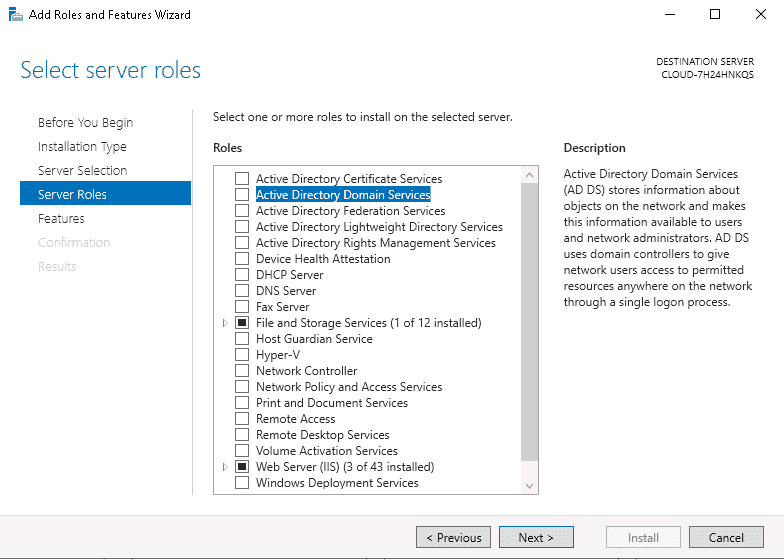
Pace 6 – Select Active Directory Domain Services and click on the Next button. You will exist asked to select features as shown beneath:
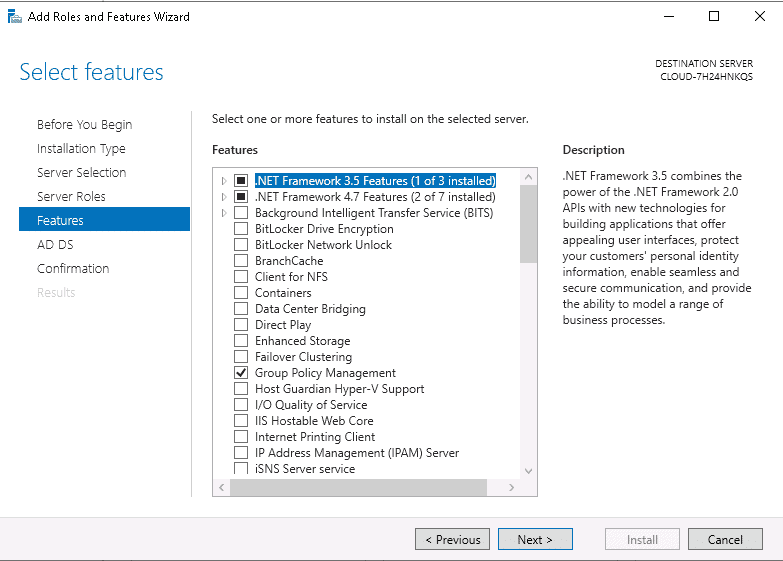
Pace 7 – Exit all default settings and click on the Next push. Next, you should come across the ostend installations selections page.
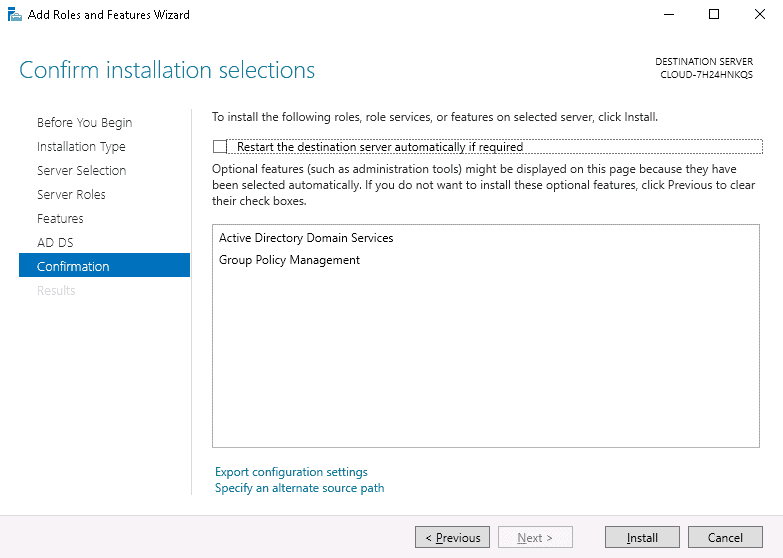
Pace 8 – Click on the Install push to offset the installation. Once the installation has been finished. Y'all should meet the following folio.
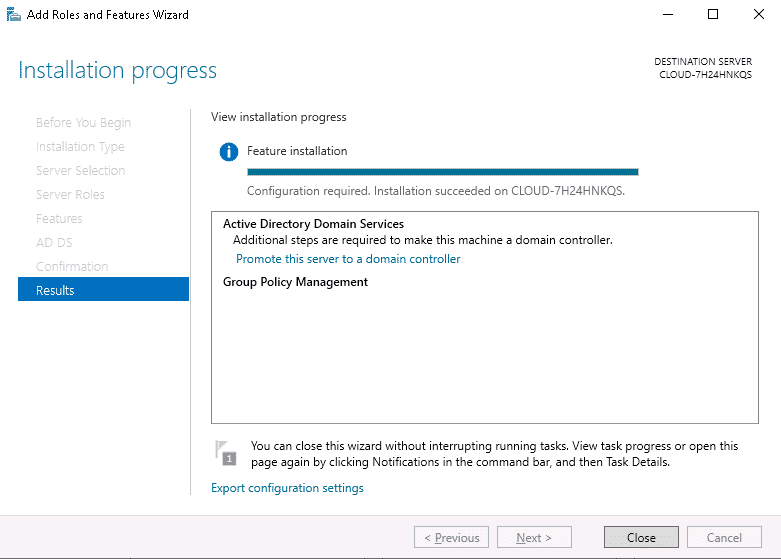
Step 9 – Click on the Close button. You lot should see the following page.
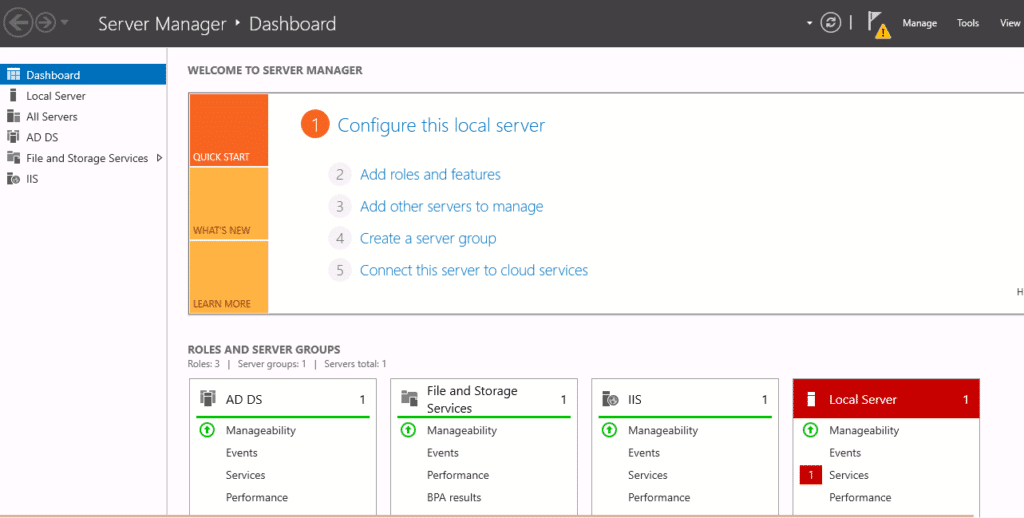
Step 10– Click on the yellow notification icon. You lot should run across the following folio:
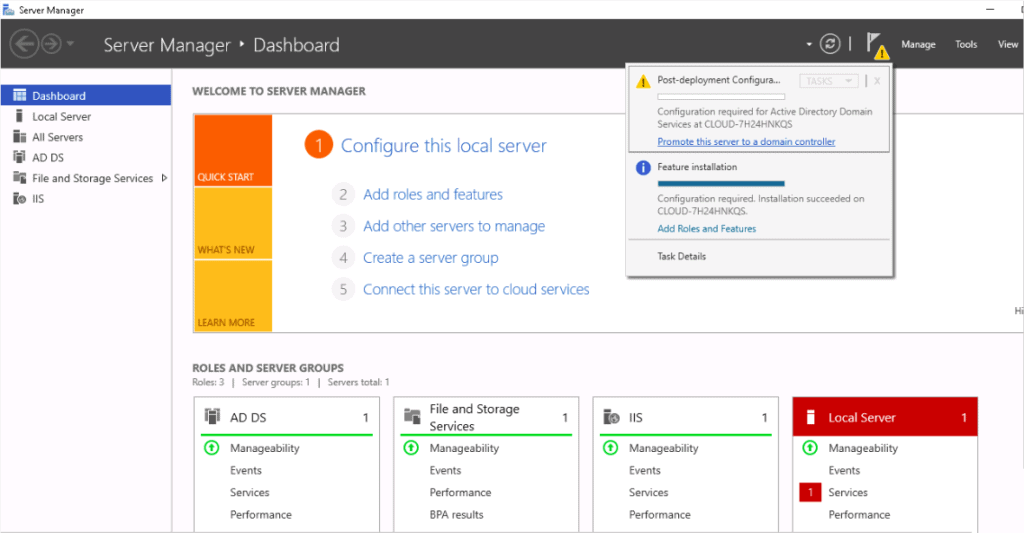
Step 11 – Click on Promote this server to a domain controller. You should see the deployment configuration page:
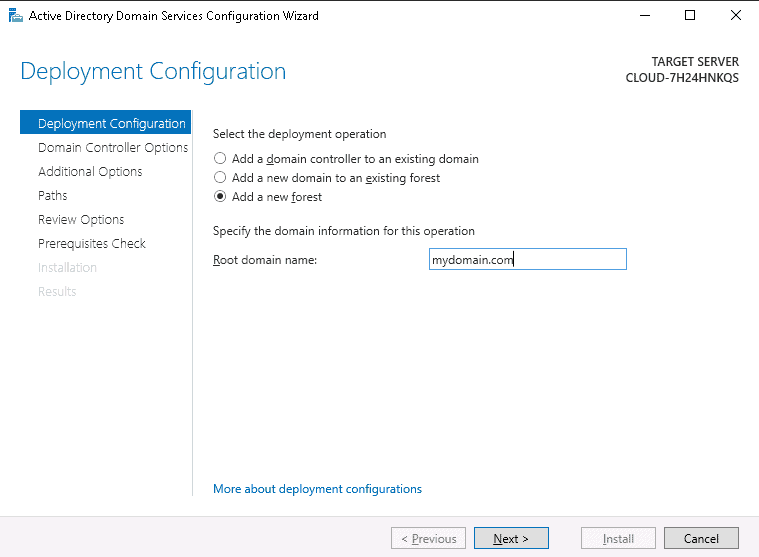
Step 12 – Select add together a new wood, ascertain your domain name and click on the Next push. You should meet the domain controller options page:
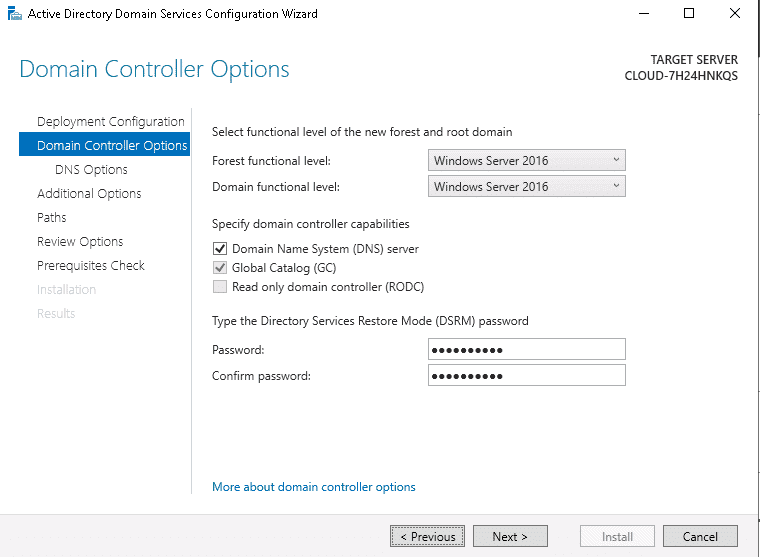
Step 13 – Define your directory service restore mode countersign and click on the Adjacent push. Y'all should meet the DNS options folio:
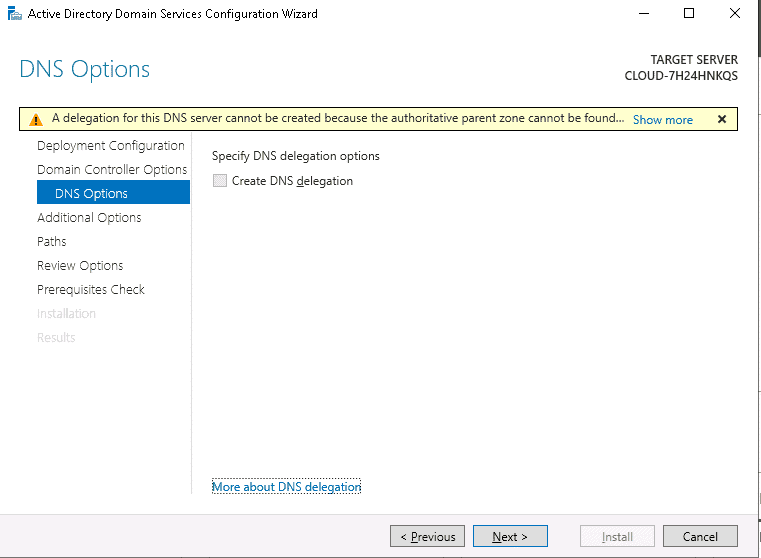
Step 14 – Leave the default configuration and click on the Next button. You lot will be asked to set a NetBIOS proper noun as shown below:
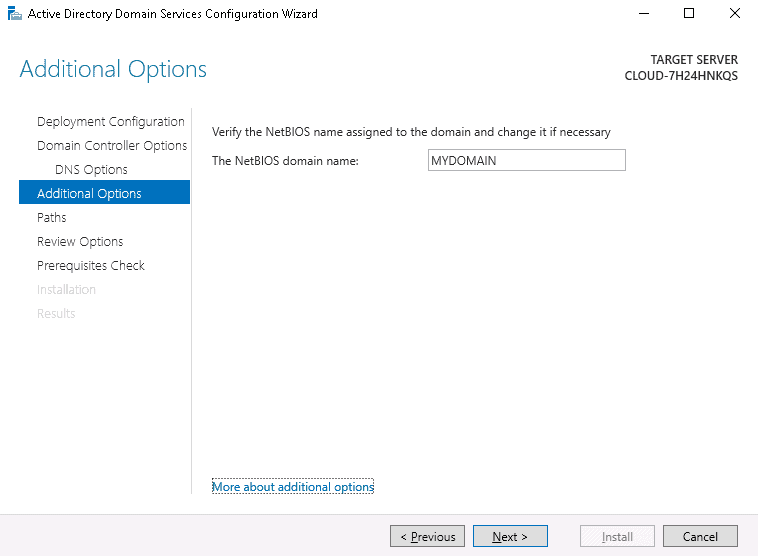
Step 15 – Set your NetBIOS name and click on the Adjacent button. You will exist asked to define AD DS database path location:
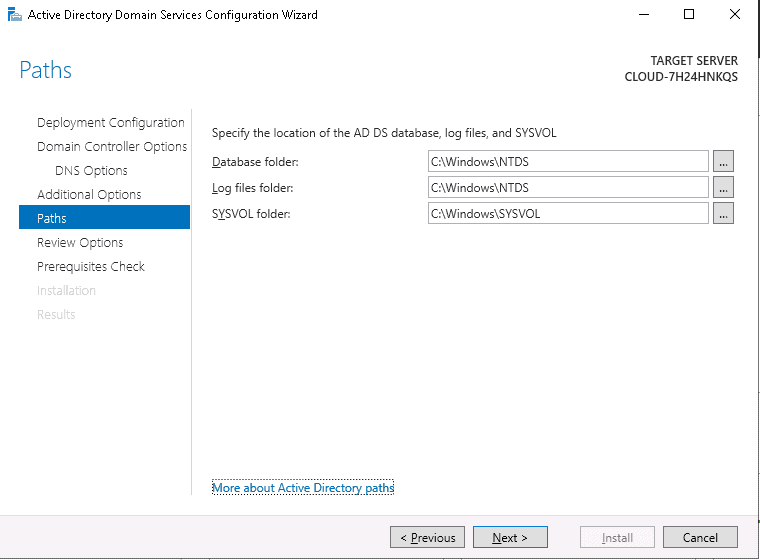
Step 16 – Leave the default path as it is and click on the Next button. You should meet the review all options folio:
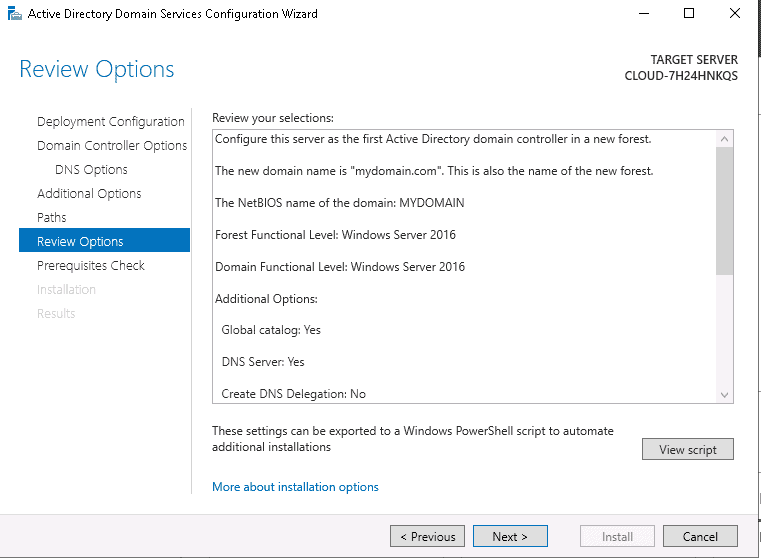
Step 17 – Review all the configurations and click on the Side by side push button. Y'all should run across the prerequisites check page:
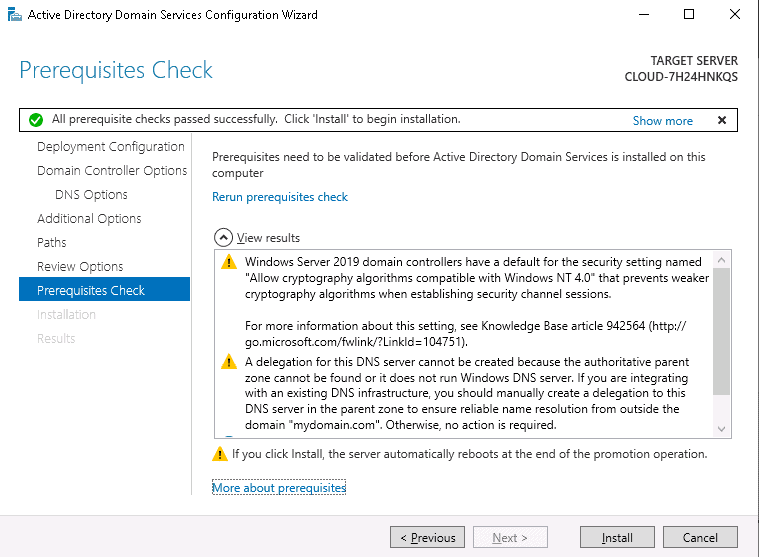
Stride 18 – Make certain all prerequisite checks are successfully then click on the Install push. In one case the installation has been finished, your system volition exist restarted automatically.
Verify Domain Controller
Adjacent, you lot will need to verify whether the Domain Controller is adequately fix or not. Once more, you can prove information technology from PowerShell.
To confirm the successful installation of the services, run the following command on Windows PowerShell.
Get-Service adws,kdc,netlogon,dns
You should see the condition of all services on the following screen:
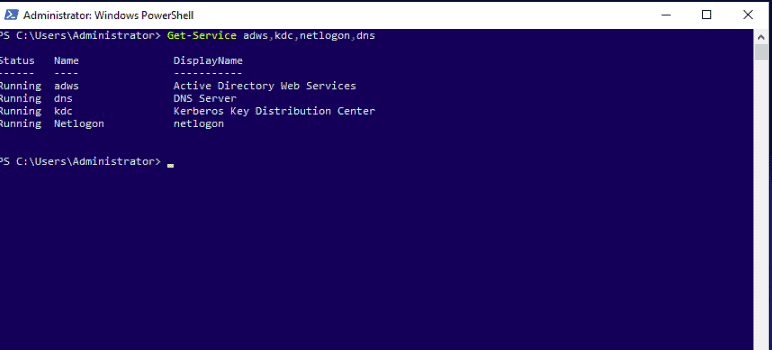
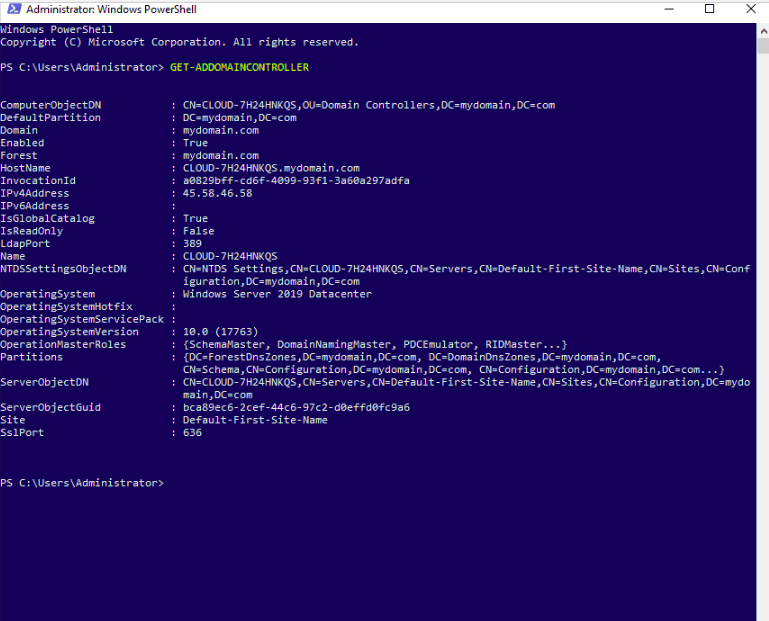
To display all the configuration details of the domain controller, run the post-obit command:
Go-ADDomainController
You should see all the information on the post-obit screen:
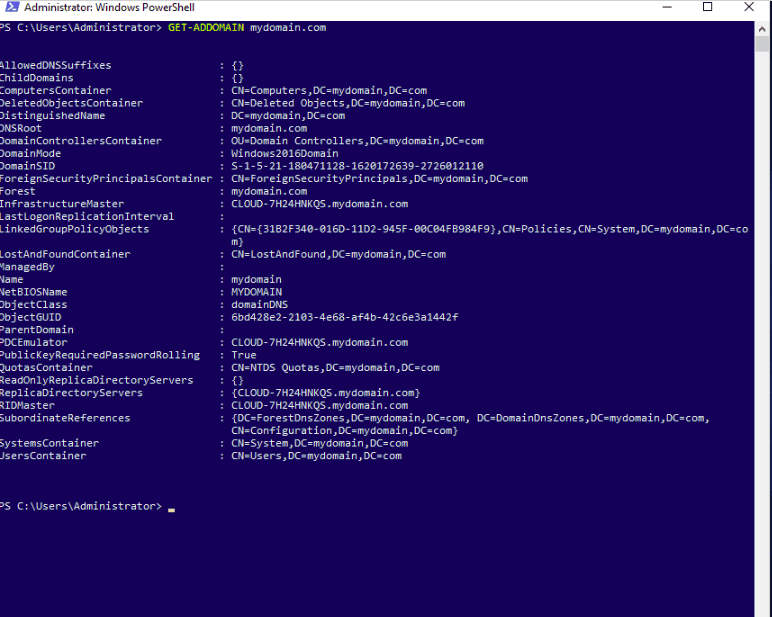
To get detailed information nigh your domain, run the following command:
Get-ADDomain mydomain.com
Y'all should run across the next screen:
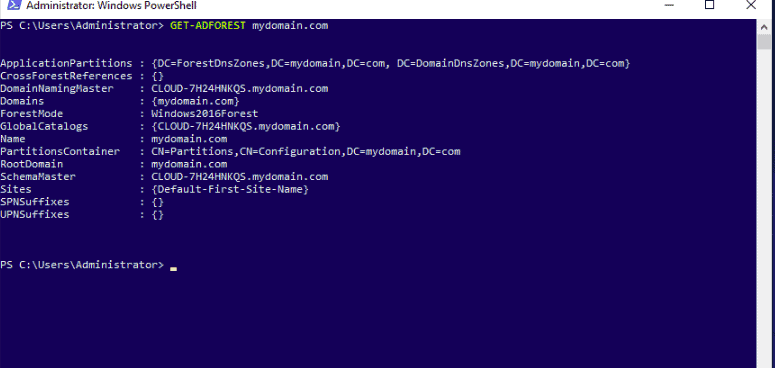
To display your Agile Directory Forest details, run the following control:
Get-ADForest mydomain.com
You lot should see the next screen:
Create Active Directory Users
After setting upwardly the Active Directory Domain controller, you must create users for the network computers. And then that all users are login to the Active Directory Domain Controller from the network reckoner. You can create a user, group, and computer using the Active Directory Users and Estimator tool.
Follow the below steps to create a new user on Active Directory:
Step 1 – Open the Server Manager, go to the Tools card and select Agile Directory Users and Computers as shown below:
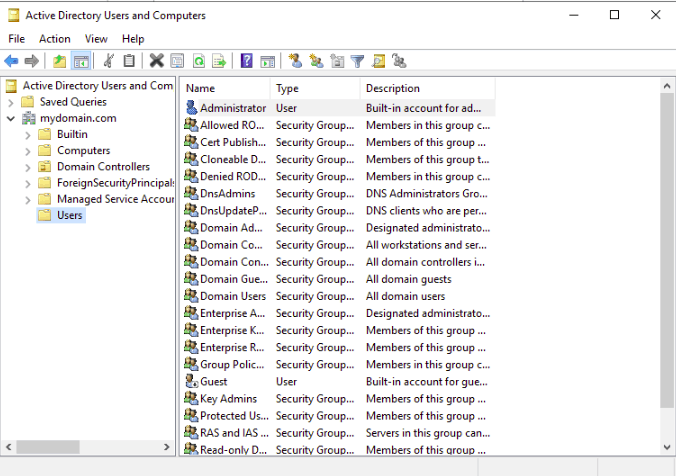
Step 2 – Correct-click on the Users. You should see the post-obit folio:
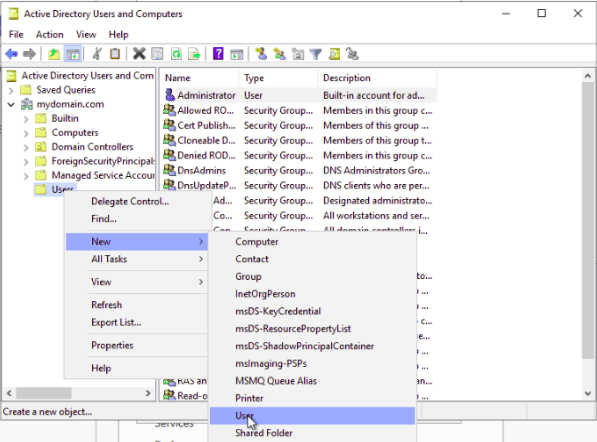
Step 3 – Click on the New => User. Yous should encounter the post-obit page:
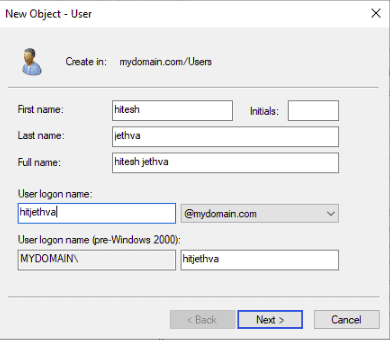
Step iv – Provide your Showtime name, Last name, Logon name, and click on the Next push. Yous should run into the following page:
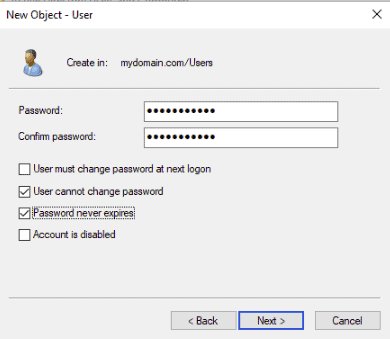
Pace 5 – Set up your countersign and click on the Side by side button. You should see the following page:
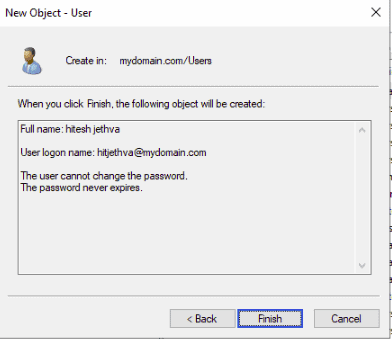
Step vi – Verify your user data and click on the Finish button.
Install Active Directory Remote Server Administration Tools
Active Directory Remote Server Assistants Tools (RSAT) is a handy tool that allows the system administrators to manage Agile Directory Domain Controller on a windows server from a computer running Windows 10 or other servers.
RSAT tools set can manage the post-obit service running on the Windows server:
- Server Managing director
- Consoles
- Microsoft Management Panel (MMC) snap-ins
- Windows PowerShell cmdlets and providers
- Control-line tools to run features on Windows Server
- IP Address Management (IPAM) Tools
- DHCP Tools
- Routing and Remote Admission Tools
- Network Policy Server Tools
Follow the below steps to install the RSAT tool on Windows Server 2019:
Step ane – Open the Server Manager equally shown below:
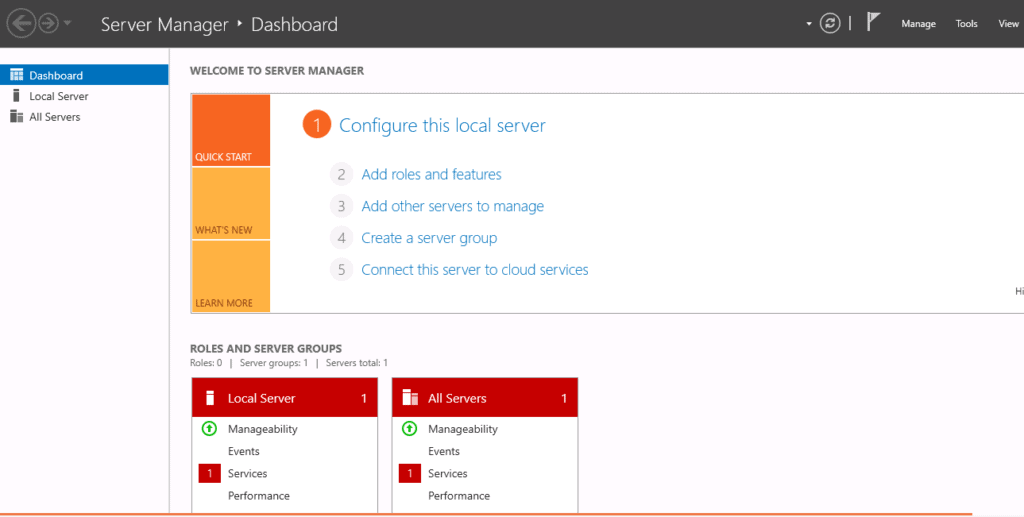
Footstep 2 – Click on the Add roles and features. You should see the following page:
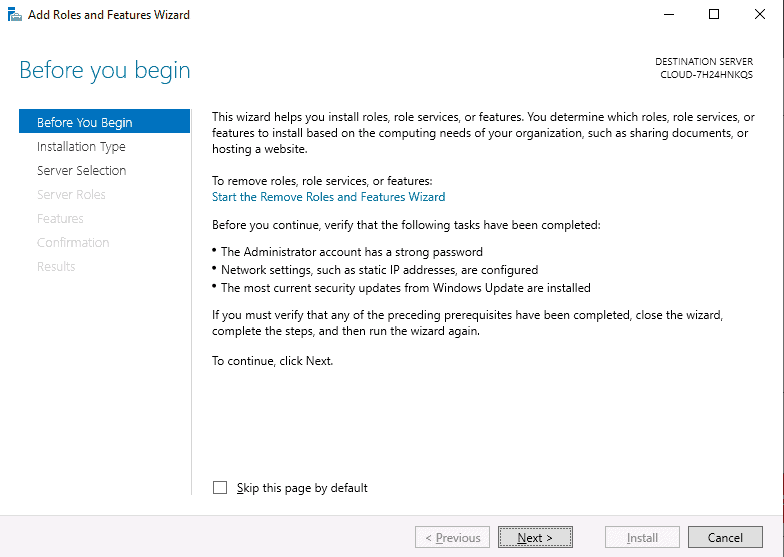
Step three – Select Office-based or feature-based installation and click on the Adjacent button. Yous should see the following page:
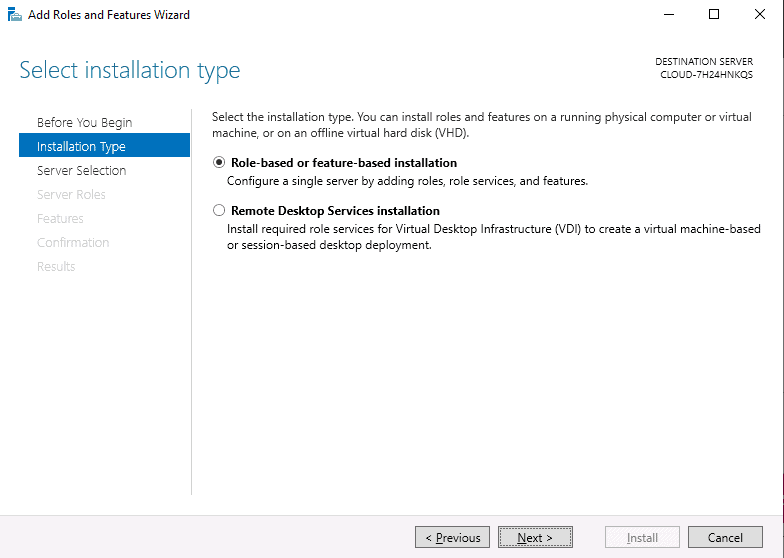
Step iv – Select "Select a server from the server pool" and click on the Next button. You lot should see the following page:
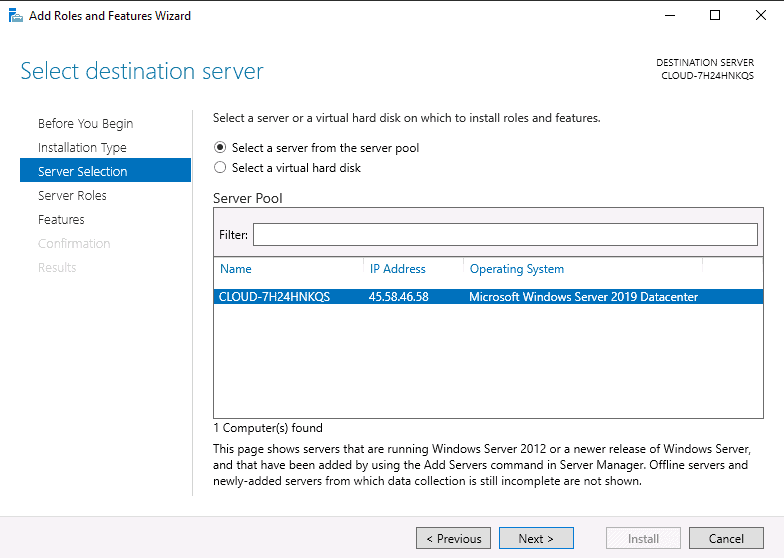
Step 5 – Select "Remote Server Administration Tools" and click on the Next push. You should run into the following page:
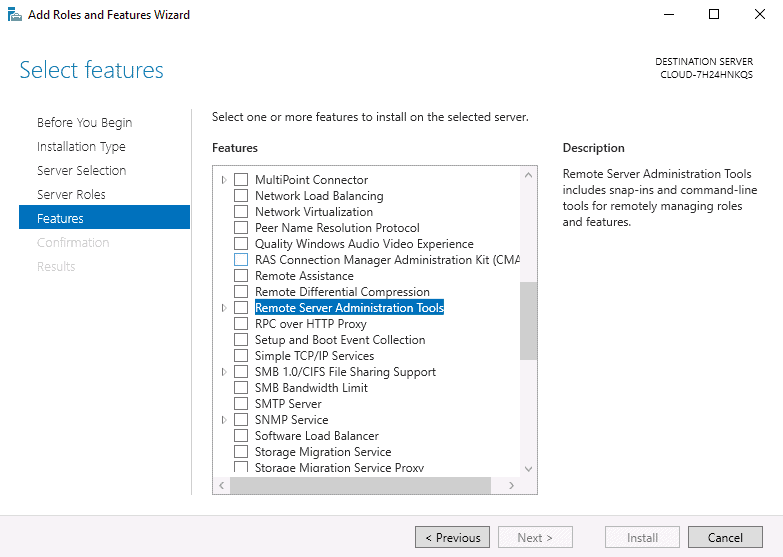
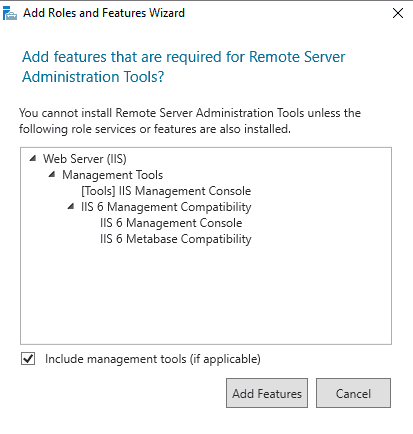
Step 6 – Click on the Add Features. You should see the following page:
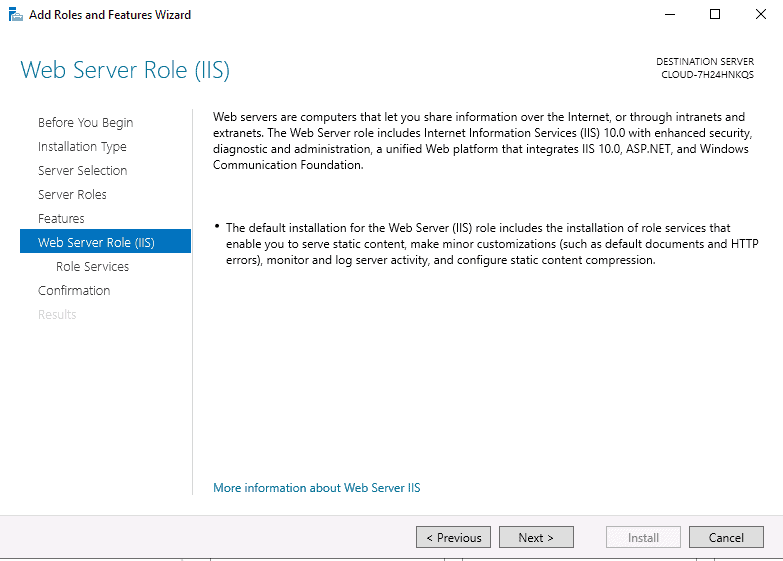
Step 7 – Click on the Next button. Y'all should encounter the post-obit page:
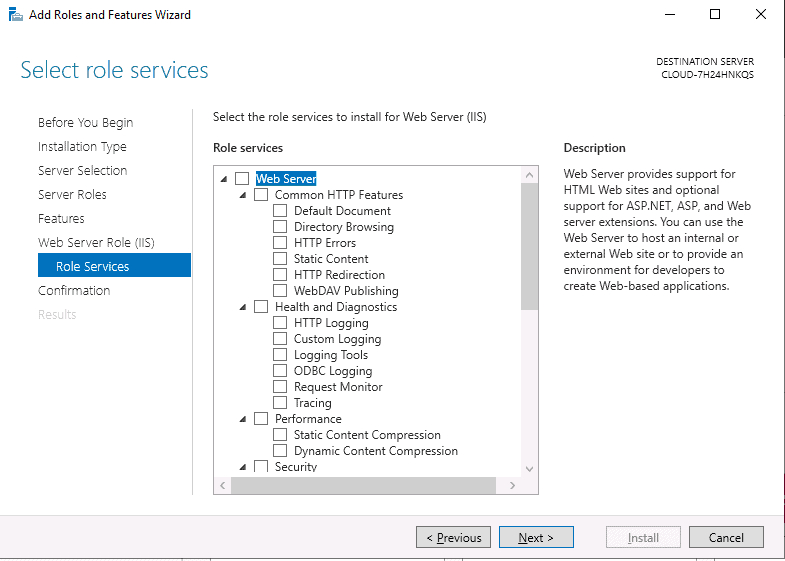
Pace viii – Leave the default settings and click on the Side by side push. You should see the following page:
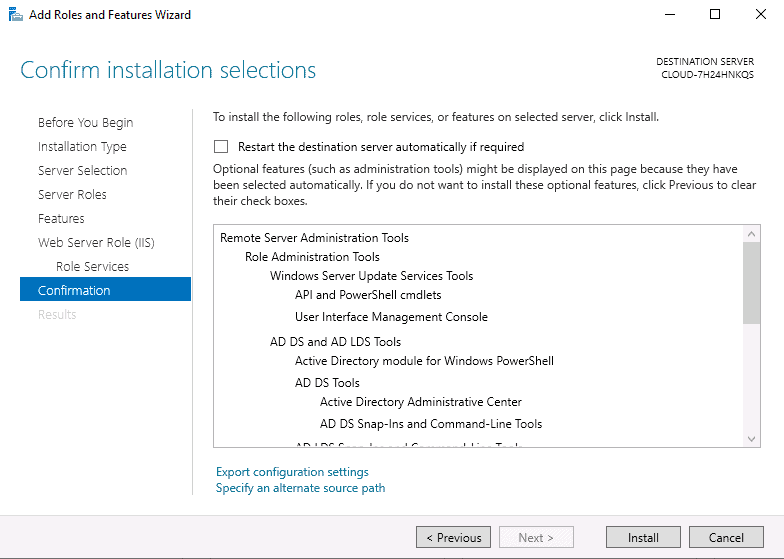
Pace ix – Ostend all settings and click on the Install button. One time the installation has been completed, click on the Close button to leave the window.
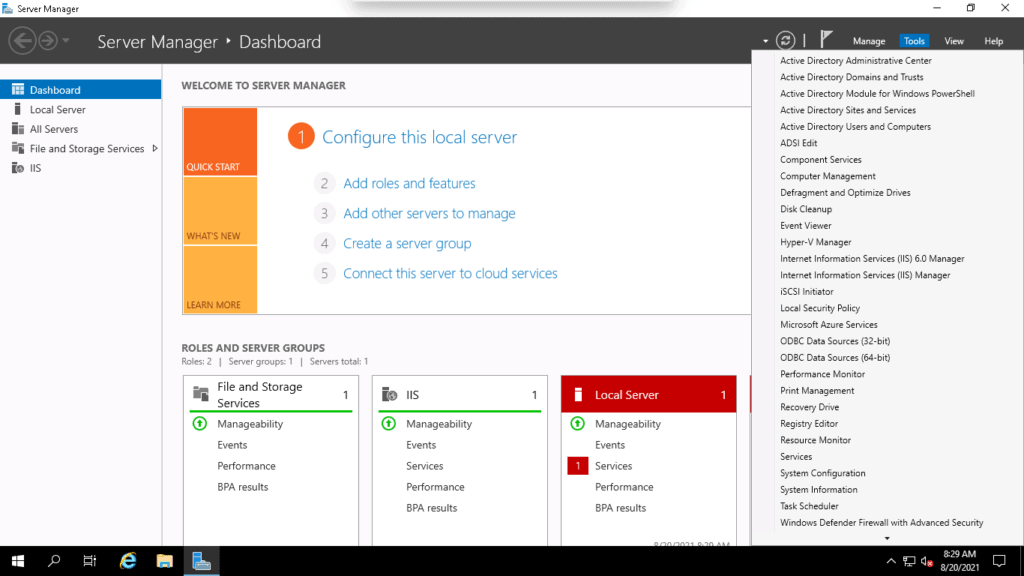
Step x – Now click on the Server Manager => Tools to access the RSAT as shown below:
What Are Agile Directory Domain Services?
Agile Directory Domain Services (AD DS) is 1 of the cadre directory services offered by AD. The main objective of Advertising DS is to use authentication and authorization for easier direction of access controls for network resources. It is the foundation of your Windows domain network. AD DS will store information most domain members, such as users/devices, verify their credentials and define their rights to admission. Domain controller runs this service. Whenever a user logs into a device or tries to access another device in a network, the domain controller is alerted.
Multiple unique services fall under the category of AD DS to manage permissions, identities, and access rights to network resources. These services are as follows:
- Active Directory Document Services (Ad CS) AD CS is a server role with which you can create a PKI (Public Key Infrastructure) and provide digital certificates for your company. These certificates tin can be used to cosign computers and users and encrypt network traffic and application traffic. For example, if you see a browser address with "https", the "s" stands for security document that it uses to encrypt the established communication between server and client.
- Agile Directory Federation Services (Advertisement FS) With AD Federation Services, you tin employ unmarried sign-on to external systems such as applications and websites. One typical case of the apply of Advertizing FS is Office 365. When a user signs in to Office 365, the user ID and password are redirected via the federation server to check whether the entered credentials are authentic against your On-prem AD. This is how it provides hallmark to external systems through the local Active Directory.
- Active Directory Lightweight Directory Services (Advertisement LDS) Advertizement LDS offers directory services with the assist of LDAP protocol without having to deploy whatever DCs. The service is used to provide directory service functionally to directory-enabled applications. Just, it does non replace AD DS.
- Active Directory Rights Direction Services (Advert RMS) The service allows you to protect information within digital content. Information technology secures the documents by defining which users can alter, open, view, print, forward, or take similar documents. For enhanced security, you tin use local certificates to encrypt documents.
The Hierarchical Structure of Agile Directory Domain Services
Ad DS systematically organizes company data in a bureaucracy that contains domains, trees, and forests. Here's what the hierarchical structure of Advertizement DS comprises of:
- Domains: A domain contains objects such as devices, groups, and users that fall under the same AD database. Think of a domain every bit a branch of a tree. A domain will have a structure the same as that of standard domains and subdomains.
- Trees: A tree is formed by grouping one or more than domains in a logical hierarchy. All domains within a tree are logically linked; hence they "trust" each other.
- Forest: A forest is a topmost level in the Active Directory of your organization. It contains one or more trees grouped. Trees within a forest are also said to "trust" each other and share catalogs, directory schemas, domain configurations, and awarding information.
- Organizational units: Organizations Units or OU are used to organize groups, users, computers, and other entities.
- Containers: A container is almost similar to an OU; the only difference is that you cannot link a GPO (Group Policy Object) to a generic container within AD.
Introduction to Agile Directory Forests and Trees
An object is a physical element present within a network, and an Advertising can have multiple objects. Ii such objects are Woods and Tree.
Forests
A Forest comprises multiple grouped trees that share a standard global itemize, directory schema, logical structure, and configuration. Information technology features two ways transitive trust relationships by default. The get-go and foremost domain created within a wood is known as the forest root domain.
In the instance of different naming schemas, Forests allows organizations to grouping their divisions which may demand to operate individually. But a company seeks to communicate with their various departments through transitive trusts and share the same schema and configuration container.
Tree
A tree features a group of one or more domains that allow the user to share resources globally. Single or multiple domains be here in the contiguous namespaces. If you add a domain in the tree, it will go the child of the tree root domain, while the domain it is linked to becomes the parent domain. The child domain utilizes the parent domain's name and attains the unique DNS (Domain Proper name System).
For example, if sbs.com is a root domain, you tin create one or more than child domains to this parent domain, such as sales.sbs.com or transfer.sbs.com. These child domains tin can also further have sub-child domains such as xyz.sales.sbs.com.
The domains within a tree have a two-manner relationship, besides known as Kerberos transitive trust relationship. For example, a Kerberos transitive trust implies that if Domain 1 trusts Domain 2, and Domain 2 trusts Domain 3, and then Domain 1 trusts Domain 3 too. In short, it means that a domain added to a tree will immediately establish trust relationships with every other domain within that tree.
Difference between the Forest and the Tree
The Forest in an Active Directory sits at the highest level and contains multiple trees, while the Tree in an Advert includes one or more domains.
Active Directory Trust Relationships and Types
A trust relationship is the formation of a logical link between two domains. One of them is known equally the trusting domain, and the other is called the trusted domain. With a trust relationship, the trusting domain will honor the login hallmark of the trusted domain.
Normally, the trusted domain stores the users, while the trusting domain comprises network resources. Thus, the users in the trusted domain are trusted and are allowed to access resources stored in the trusting domain.
Trusts tin be created manually or automatically. These trusts are further classified into two categories viz—transitive and non-transitive trust. Transitive trust only implies that if Domain one trusts Domain 2 and Domain two trusts Domain three, then Domain one trusts Domain three as well. Non-transitive trust means that if Domain one trusts Domain 2, and Domain two trusts Domain 3, so Domain 1 DOES NOT trust Domain 3.
Trusts can further be one-style or two-manner. Post-obit are the types of trust relationships that are either 1-way or two-way by default:
- Tree-root trust A tree-root trust implicitly forms when a user adds a new tree root domain inside a woods. Only the domains at the topmost part of each tree can take function in the tree-root trust. Tree-root trust is a type of two-way transitive trust that is formed automatically.
- Parent-Kid trust When a user adds a child domain in a tree, a parent-child trust human relationship is implicitly formed. The DCPROMO process will automatically create a parent-child trust human relationship in a DNS namespace hierarchy betwixt the new domain and the preceding domain. This type of trust is a two-way transitive trust formed automatically.
- Shortcut trust A system admin manually needs to create a shortcut trust between two domains inside a forest. This type of trust is oftentimes made in extensive forests to enhance user logon time, specifically for users who logon into computers of other domains within the forest. It is a transitive type of trust, and you can configure it as one-way or two-way.
- External trust A organisation admin creates an external trust between two domains belonging to different forests or between a domain in an AD forest and a domain in Windows NT 4.0 or earlier version. This type of trust is normally created when users migrate resources from a Windows NT 4.0 domain to some other domain in an Advertizement. It is a not-transitive blazon of trust, which can exist either one-way or two-way.
- Woods Trust A organisation admin creates a forest trust explicitly betwixt two woods root domains (functional for Windows Server 2003 and subsequently domains). Such a type of trust allows all domains in ane woods to trust all domains in another forest. Though it is a transitive trust, it will not be transitive confronting iii or more than forests. And it can either be one-style or ii-mode.
- Realm Trust A system admin may create a realm trust explicitly between a Windows 2003 or later domain and a non-Windows Kerberos realm. This type of trust can be one-mode or ii-manner and transitive or non-transitive.
Those were the core types of trust relationships in an Active Directory. Organizations need to accept precise planning in place for trust relationships to ensure users become timely access to network resource they need.
Source: https://www.ittsystems.com/active-directory-setup-guide/
Posted by: hillreyer2001.blogspot.com
0 Response to "How To Access Active Directory On Windows 10"
Post a Comment